
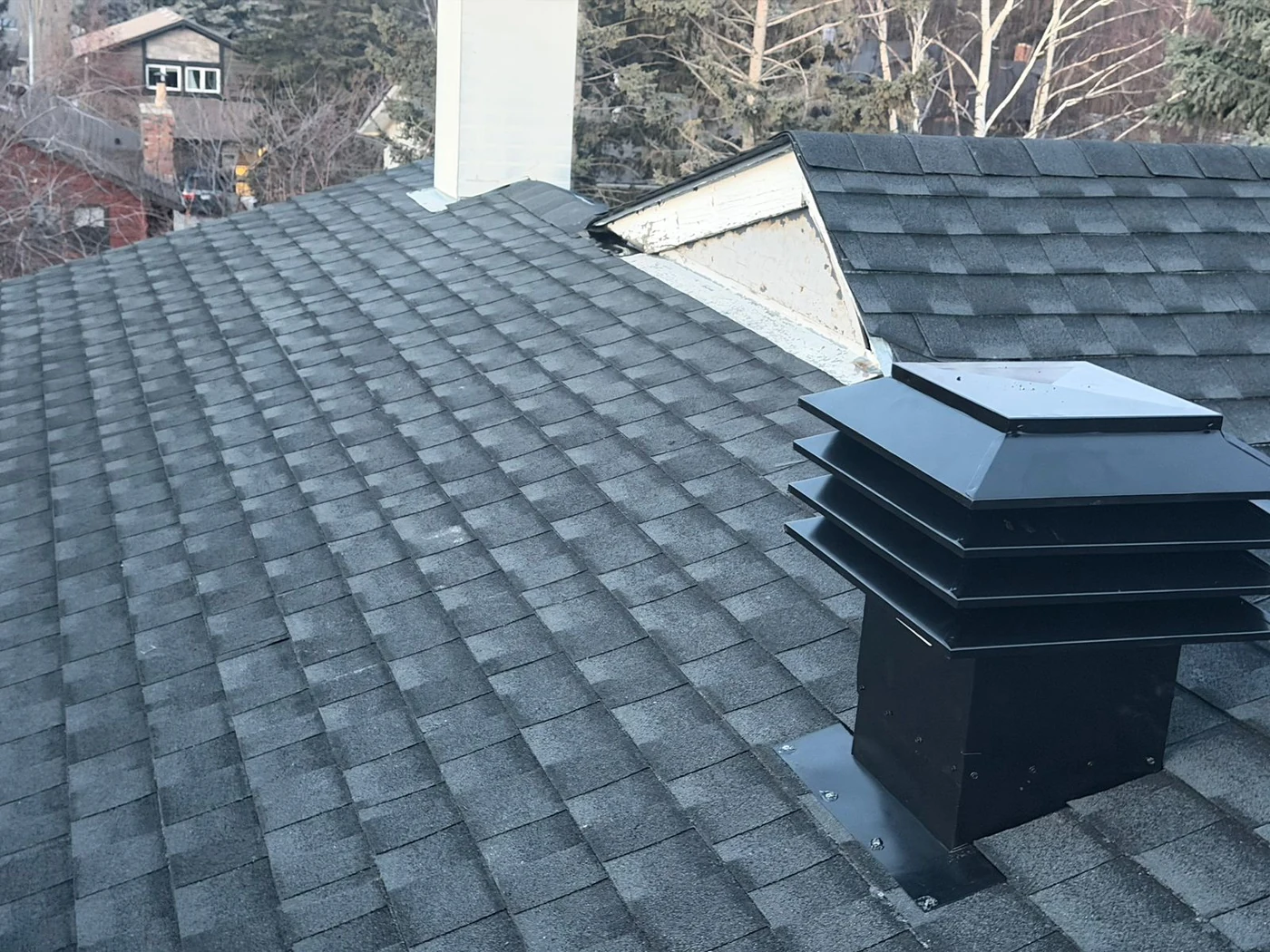


Who this is for
- There are very few high roof exhaust vents
- Exhaust vents are clustered or poorly placed
- Attic moisture or heat concerns have been raised
- A new roof is an opportunity to correct the vent layout
Give attic heat and moisture a way out.
Roof exhaust and low intake work together. We assess the existing path before recommending more or different roof vents.
A clear route out, high on the roof
Roof exhaust provides an outlet for warm, moisture-laden attic air. The position and capacity need to suit the roof.
Intake that can actually feed it
Soffit openings and baffles need to stay clear. Adding exhaust cannot make up for blocked or inadequate intake.
The right hardware for the job
Box, tall-profile, ridge or solar-powered vents are options—not interchangeable fixes. We choose an approach for the attic and roof layout.
Matched to the roof, not a vent count.
Inspect before specifying
We check the existing exhaust, roof geometry and accessible attic conditions before setting the scope.
Weather-tight installation
Vent flashing and surrounding shingles must shed rain and snow as part of the roof.
Investigate moisture symptoms
Staining or deterioration may have other causes, including air leakage or roof leaks. Ventilation is assessed alongside those conditions.
Free roof check.
Start with a free roof and ventilation check. We will look at the system before recommending hardware.
See how roof ventilation works →
Getting the airflow right.
How do you know if my roof needs more ventilation?
We consider the attic area, roof layout, existing vent capacity and available intake. The number of vents visible from the street is not enough to size a system. We also inspect accessible attic conditions and any symptoms you have noticed.
Why not just add more roof vents?
Exhaust needs enough intake to work as intended. Adding outlets without checking the soffits and airflow path may not improve the system. We plan the high outlets and low intake together.
What is the difference between box, ridge and solar vents?
They provide different ways for air to leave the attic. Their capacity, placement and operating method vary. We select a suitable approach for the roof instead of treating every vent as an interchangeable upgrade.
Can I combine every type of roof vent?
Not as a shortcut to better airflow. Mixing exhaust types in one attic space can interfere with the intended intake-to-exhaust path. The layout needs to be designed as a system and follow the product requirements.
Will ventilation fix moisture or frost in my attic?
It may be part of the solution, but moisture can also come from air leaks, roof leaks or exhaust ducts. We investigate the source as well as the ventilation. More roof vents alone should not be promised as a cure.
Do baffles matter if I already have soffit vents?
Yes, where baffles are needed to preserve the intake path. Soffit openings cannot feed the attic if insulation blocks the route above them. We check that detail when reviewing insulation and ventilation together.
Can you upgrade ventilation without replacing the whole roof?
Sometimes. It depends on the existing shingles, roof details and the work needed to balance the system. We can assess a stand-alone upgrade or include the ventilation plan in a roof replacement.