
Ceiling stain after a Calgary Chinook? Roof leak or attic rain?


The weather warms up after a Calgary cold snap, and a damp patch appears on the ceiling. It has not rained. One possible explanation is sitting inside the attic: frost that has started to melt.
If that moisture came from frost that built up inside the attic and then melted, that is what is commonly called attic rain. The water drips onto the insulation and can eventually reach the ceiling below.
At TrueFlight, attic moisture is a recurring inspection finding. One of the problems we repeatedly uncover is missing baffles, with insulation pushed over the soffit intake.
Where does the water come from?
A glass of ice water can leave a wet ring on the counter even though it is not leaking. Moisture from the surrounding air condenses on the cold glass.
The same basic process happens when moist indoor air reaches cold nails and roof decking in an attic. During freezing weather, that moisture can collect as frost instead of staying as droplets.
Usually, the moisture starts in the house. Warm indoor air escapes through gaps around the attic hatch, pipes, wiring and other openings in the ceiling. Leaking or improperly terminated bathroom exhaust ducts are another route to check.
During a long cold spell, the buildup can continue out of sight. A Chinook or other thaw then melts it faster than the attic can dry. Water falls onto the insulation or follows the framing toward the ceiling.
What our inspection photos show
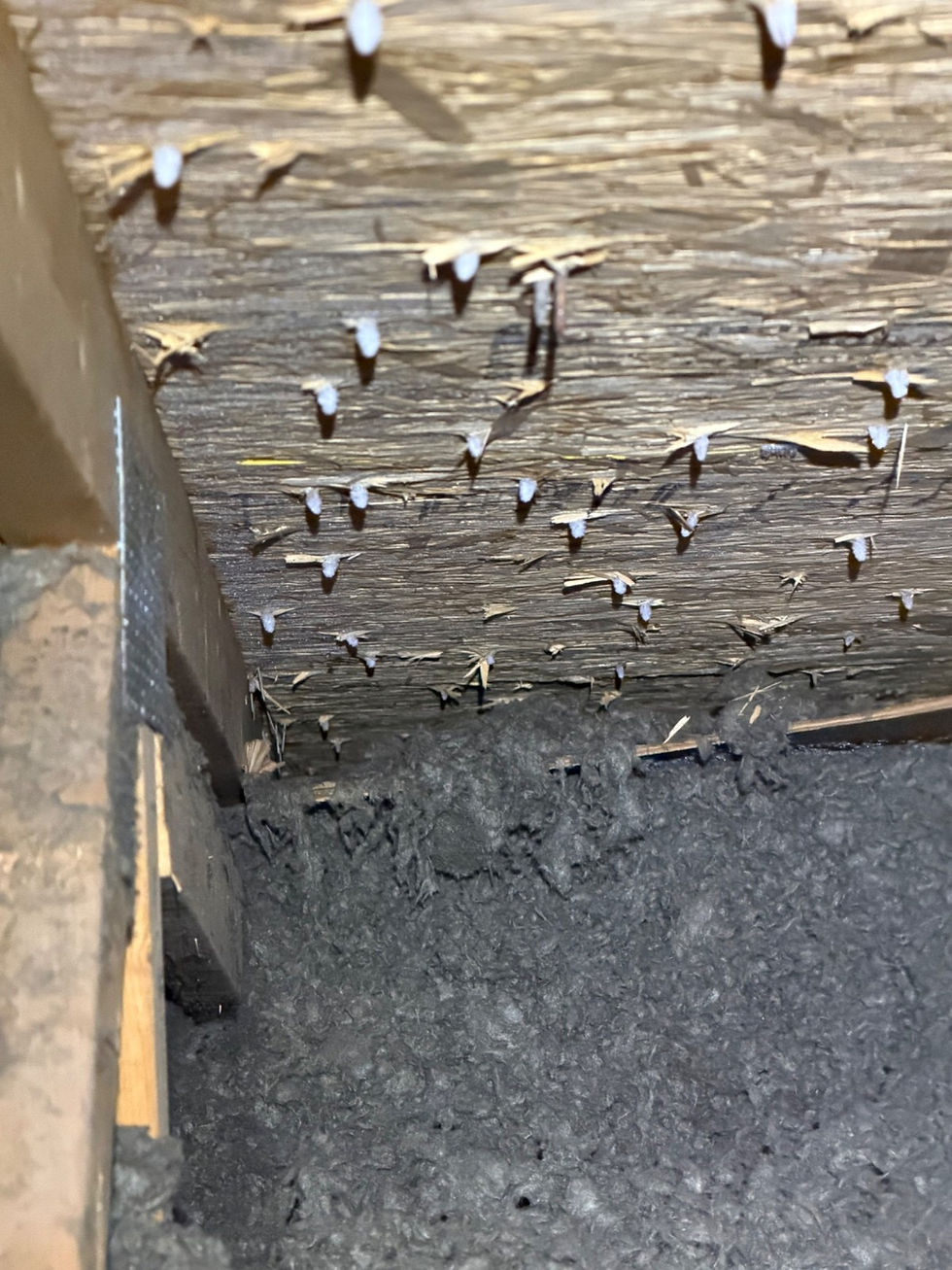
In our nail close-up, white frost surrounds the ends of nails beneath the roof deck. Those deposits explain how water can be stored above the insulation before anyone sees a stain indoors.
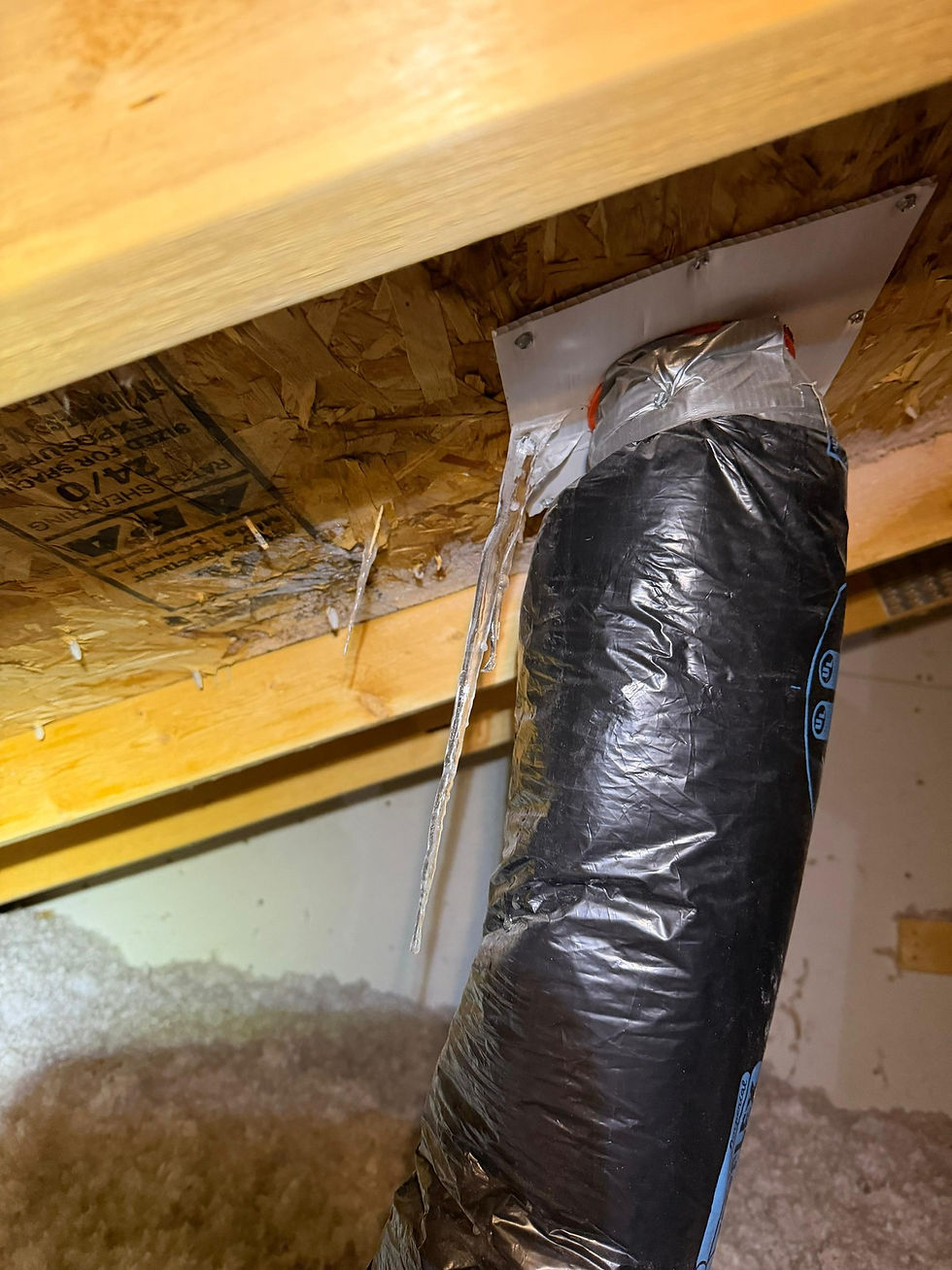
Another photograph shows an icicle beside a black-wrapped attic duct connection. It is a reason to investigate the duct, the surrounding air seal and the nearby roof penetration, rather than assuming the shingles must be leaking.
The photograph of droplets on the insulation shows where some of that water ends up. These are small details, but they make the problem much easier to understand than a ceiling stain alone.
Why baffles matter
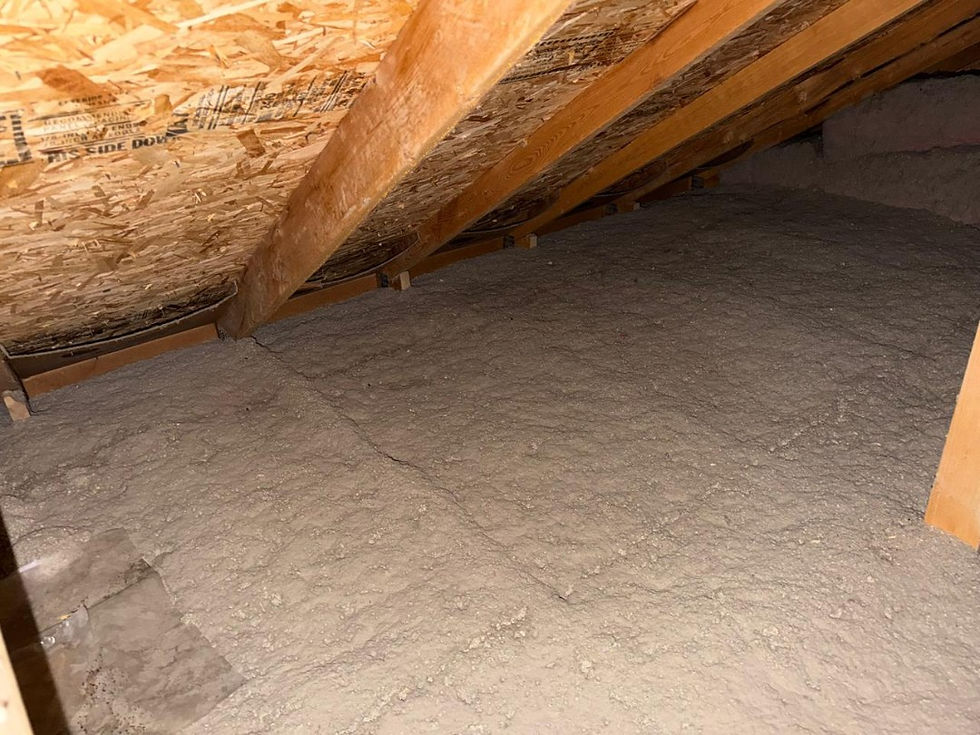
The soffit intake is meant to bring outdoor air into a vented attic. Baffles keep an open passage above the insulation at the eaves.
If insulation is stuffed into that passage, the intake cannot do its job properly. That is a common condition we find and correct.
But clearing the soffits is only part of the repair. Air leaks from the house still need sealing, and the roof exhaust needs a suitable intake supply. Installing another roof vent does not seal a leaky attic hatch.
Where the eaves are accessible, we move insulation clear of the soffits and fit baffles before the top-up. Some low-pitched roofs need a different access plan because there is too little working room inside. Air sealing and hatch insulation are normally part of our insulation scope as well.
The aim is straightforward: keep household heat and moisture in the living space, maintain the attic's ventilation paths, and keep the insulation dry.
What happens to wet insulation?
Wet insulation loses effectiveness. Fibreglass is not a drainage layer; water can remain within it even though the glass fibres themselves do not readily absorb it. Cellulose absorbs moisture and can mat or settle when heavily wet.
Neither material should simply be buried under more insulation. First stop the moisture source, then assess what can dry and what needs replacing.
Is it attic rain or a roof leak?
The timing gives us clues. A stain appearing after a cold spell and thaw points us toward frost buildup. Water appearing during rain directs attention to the roof covering, flashings and penetrations.
Timing is not proof. Snow entering through a vent, melting roof snow and an actual roof leak can also cause water during a thaw. The roof and attic need to be checked together.
Questions homeowners ask
Does frost on a few nails mean I need a new roof?
No. Frost alone does not establish that the shingles have failed. Heavy buildup, repeated wetting or damage needs investigation, but the repair should address the source of the moisture.
Will an insulation top-up stop attic rain?
Adding insulation alone will not stop warm, moist air leaking through the ceiling or reopen blocked intake. Those details need correcting as part of the work.
What should I do before the inspection?
Photograph the stain and note when it appeared, especially whether it followed rain, a cold spell or a sudden warm-up. Keep the attic hatch closed rather than opening it to “dry things out.” Stay clear of a sagging ceiling or water near electrical fittings and get urgent help for either.
A ceiling stain deserves an explanation
Book a free roof and attic inspection with TrueFlight. Tell us when the water appeared and what the weather was doing. We can assess the roof and attic conditions and explain what needs fixing so you can approve the right repair.
Call us directly: 403-879-8988.

Comments